
Currently Empty: R0,00



Articles
The Importance of Puppy Socialisation
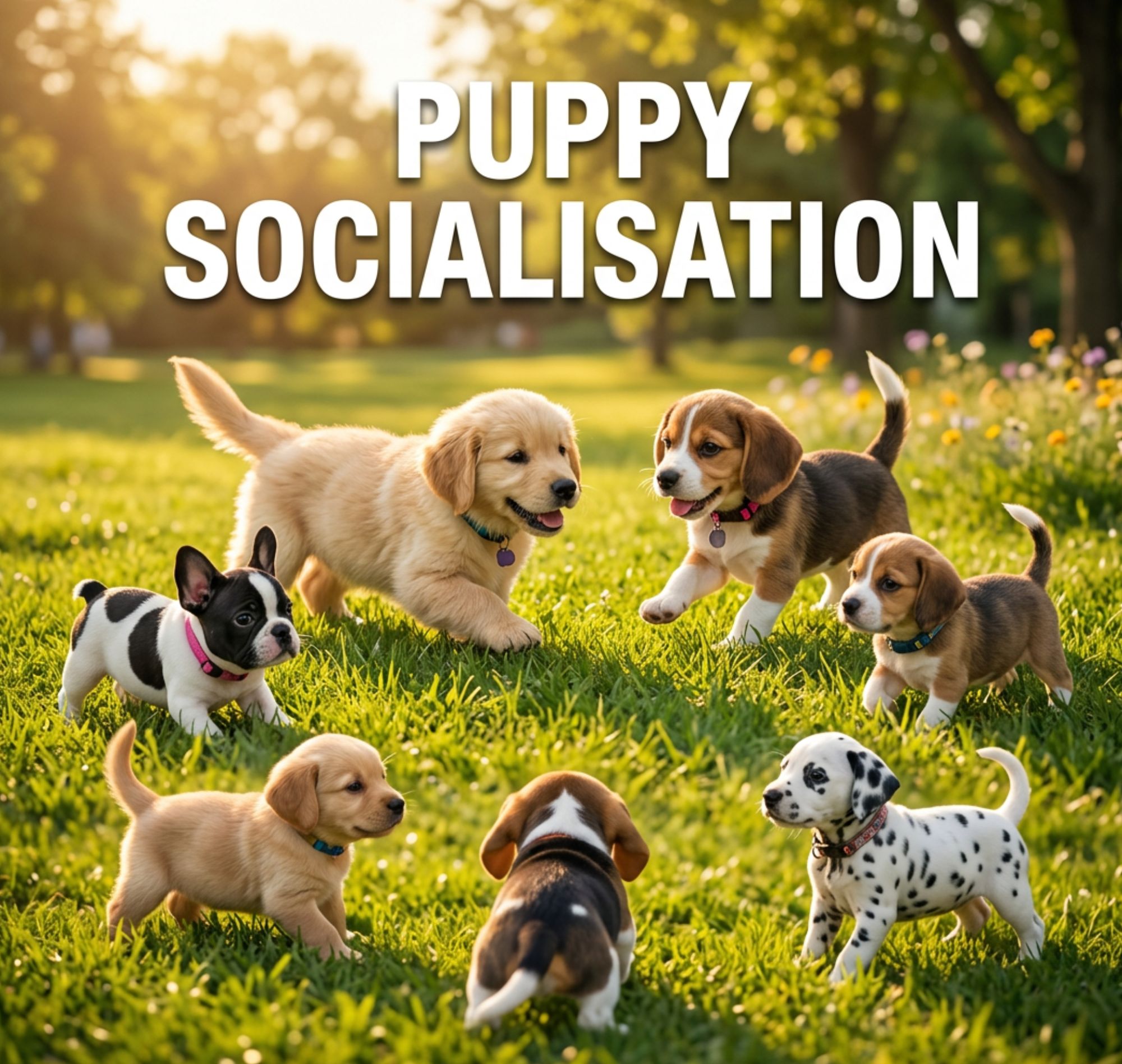
The Importance of Puppy Socialisation
Puppy socialisation is one of the most important parts of raising a confident, emotionally healthy, and well-adjusted dog. It is the process of carefully and positively introducing a puppy to the people, animals, environments, sounds, surfaces, handling, routines, and everyday experiences they are likely to encounter throughout life. Socialisation is not simply about allowing a puppy to meet other dogs; it is about helping the puppy learn that the world is safe, predictable, and manageable.
Why Early Socialisation Matters
During puppyhood, dogs pass through a sensitive developmental period when they are especially open to learning from new experiences. Veterinary behaviour sources commonly describe this key window as beginning at around 3 weeks of age and continuing until approximately 14 to 16 weeks. During this time, puppies are naturally more curious and adaptable, which makes it easier for them to form positive associations with unfamiliar people, animals, places, sounds, and situations.
If a puppy has repeated calm, positive experiences during this period, they are more likely to grow into a confident adult dog that can cope with normal life events. If a puppy is isolated, overwhelmed, frightened, or exposed only to a very limited environment, they may become more likely to react with fear, avoidance, anxiety, or aggression later in life. This is why early socialisation is often described as a form of behavioural prevention.
Building Confidence and Emotional Resilience
A well-socialised puppy learns that novelty is not automatically dangerous. For example, a puppy who has calmly experienced different people, umbrellas, bicycles, vehicles, household appliances, veterinary handling, car travel, children playing, and different walking surfaces is less likely to panic when encountering these things as an adult. Each positive exposure teaches the puppy to assess new situations with curiosity rather than fear.
Confidence does not mean forcing a puppy into every situation. True socialisation should be gentle, controlled, and enjoyable. The puppy should be allowed to observe, investigate at their own pace, and receive rewards such as treats, praise, play, or distance from anything that feels worrying. This builds emotional resilience because the puppy learns that new experiences can be handled safely and successfully.
Preventing Fear, Anxiety, and Behaviour Problems
Many behaviour problems in adult dogs are rooted in fear, uncertainty, or poor early experiences. Dogs that are not properly socialised may become fearful of strangers, reactive toward other dogs, uncomfortable with handling, distressed by noise, anxious in new places, or defensive when approached. In some cases, fear can escalate into growling, barking, lunging, snapping, or biting because the dog feels unable to cope.
Good socialisation reduces the likelihood of these problems by teaching the puppy that everyday situations are normal. It does not guarantee that a dog will never experience fear, but it gives the dog a stronger foundation for coping. Prevention is especially important because fear-based behaviour can be difficult and time-consuming to change once it is established in adulthood.
Improving the Human–Dog Bond
Socialisation also strengthens the relationship between the puppy and their caregiver. When a puppy learns that their person provides safety, guidance, rewards, and calm support in unfamiliar situations, trust grows. This trust becomes especially important during training, veterinary visits, grooming, travel, and public outings.
A puppy who has been positively introduced to everyday life is often easier to include in family activities. They may cope better with visitors, walks, outings, car trips, household routines, and changes in environment. This creates a more harmonious relationship because the dog is less stressed and the owner is better able to manage the dog confidently and kindly.
Socialisation Is More Than Meeting Other Dogs
One common misunderstanding is that socialisation means letting puppies play with as many dogs as possible. While carefully chosen dog interactions can be valuable, socialisation is much broader. Puppies need positive exposure to many categories of experience, including people of different appearances and ages, calm vaccinated dogs, household noises, traffic sounds, grooming tools, veterinary-style handling, different surfaces, crates, car travel, public spaces, and normal family routines.
The goal is not to overwhelm the puppy with constant stimulation. The goal is controlled variety. A short, positive encounter is far more valuable than a long or frightening one. Puppies should leave socialisation experiences feeling successful, not exhausted or scared.
Safe Socialisation and Health Considerations
Because young puppies are still developing immunity, socialisation must be balanced with sensible disease prevention. This does not mean keeping the puppy isolated until every vaccination is complete. Instead, safe socialisation may include inviting healthy, vaccinated dogs to the home, carrying the puppy in public areas, visiting clean environments, attending well-managed puppy classes, arranging controlled meetings with friendly people, and avoiding high-risk places where many unknown dogs may have been.
Owners should follow veterinary guidance on vaccination schedules and local disease risks. The safest approach is not isolation, but carefully planned exposure that protects the puppy’s physical health while also supporting behavioural development.
How to Socialise a Puppy Properly
• Start early: Begin gentle socialisation as soon as the puppy is settled and your veterinarian advises it is safe to do so.
• Keep experiences positive: Pair new people, places, sounds, and handling with treats, praise, play, and calm reassurance.
• Use short sessions: Brief, successful exposures are better than long sessions that overwhelm the puppy.
• Watch body language: Signs such as tucked tail, trembling, lip licking, yawning, hiding, freezing, or trying to escape may indicate stress.
• Let the puppy set the pace: Do not force interaction. Increase distance or end the session if the puppy becomes worried.
• Choose appropriate dogs: Interactions should be with healthy, vaccinated, calm, puppy-friendly dogs.
• Include handling practice: Gently introduce touching ears, paws, mouth, collar, and body so grooming and veterinary care are less stressful later.
• Continue beyond puppyhood: Early socialisation is crucial, but positive exposure and learning should continue throughout the dog’s life.
Examples of Useful Socialisation Experiences
Useful socialisation experiences may include hearing the vacuum cleaner from a comfortable distance, walking on grass, paving, tiles, carpet, and gravel, seeing people wearing hats or sunglasses, observing bicycles and prams, travelling in a car, meeting calm children under supervision, hearing gentle traffic noise, visiting a veterinary clinic for a friendly weigh-in, and calmly watching other animals from a safe distance. Each experience should be adjusted to the puppy’s confidence level.
The Consequences of Poor Socialisation
Poorly socialised puppies may struggle with ordinary parts of life. They may become anxious when visitors arrive, panic during grooming, bark at unfamiliar people, refuse to walk in new places, react defensively toward other dogs, or become distressed during travel and veterinary care. These behaviours can reduce the dog’s quality of life and make ownership more stressful.
In severe cases, behavioural problems can damage the human–animal bond and may contribute to dogs being surrendered, rehomed, or managed with significant restrictions. This is why early socialisation is not an optional extra; it is a core part of responsible puppy care.
Conclusion
Puppy socialisation is essential because it shapes how a dog understands and responds to the world. When done early, safely, and positively, it helps prevent fear-related behaviour problems, builds confidence, strengthens the bond between dog and owner, and prepares the puppy for a happier and more manageable adult life. The most effective socialisation is gentle, varied, rewarding, and guided by the puppy’s comfort level. A well-socialised puppy is more likely to become a stable, adaptable, and confident companion.