
Currently Empty: R0,00



Articles
Leash reactivity in dogs explained.
Why Some Dogs Become Reactive Only When on a Leash
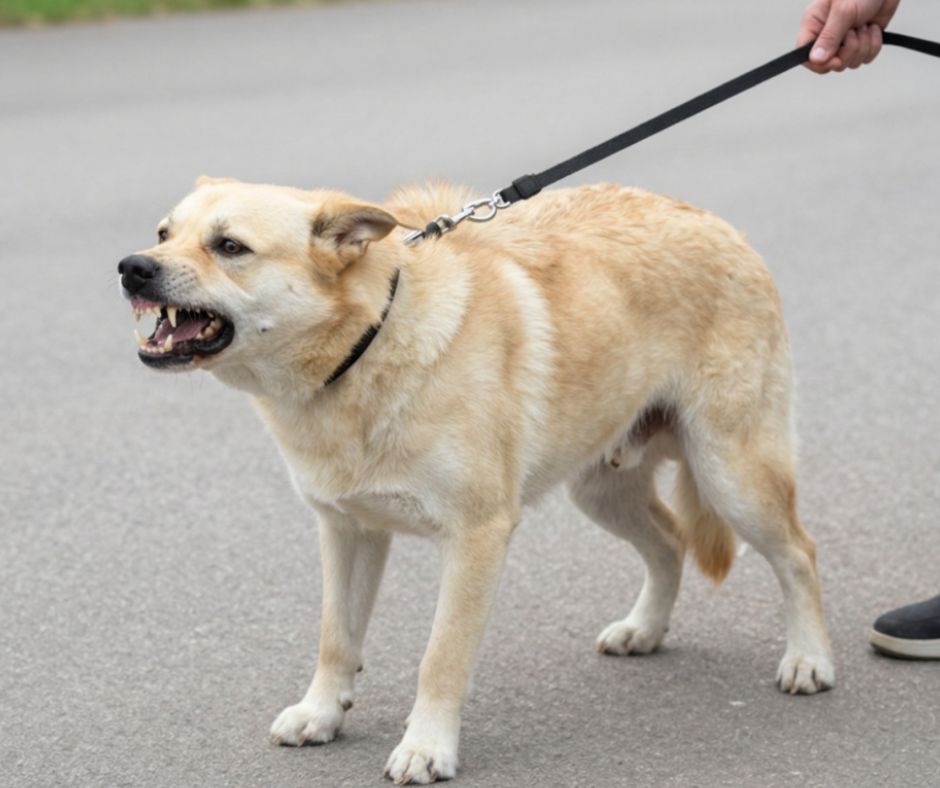
Leash reactivity is one of the most common and misunderstood behavioural challenges seen in companion dogs. It can be especially confusing when a dog appears relaxed, sociable, or playful off leash, yet barks, lunges, growls, whines, or pulls intensely the moment they are attached to a lead. To many people, this looks like disobedience or aggression. In reality, leash reactivity is usually a sign that the dog is struggling emotionally in a situation where their normal coping strategies have been restricted.
A dog who reacts on leash is not necessarily reactive in every context. The leash changes how the dog can move, communicate, avoid pressure, and respond to the environment. For some dogs, that physical restriction creates fear. For others, it creates frustration. For many, it creates a complicated mixture of both.
The Leash Removes Choice and Control
Dogs naturally use movement to regulate social encounters and manage stress. When they notice another dog, person, vehicle, animal, or unfamiliar object, they may choose to move away, pause, slow down, sniff the ground, take a curved path, turn their head, or avoid interaction altogether. These behaviours are not random; they are part of how dogs create safety and reduce tension.
On leash, many of these choices are limited or removed. A short lead may keep the dog close to the handler, prevent them from moving away, or force them to continue forward even when they would prefer to create distance. When a dog feels unable to escape or control the interaction, their nervous system may shift from avoidance to defence. Barking, lunging, growling, and pulling can then become the dog’s way of saying, “I need more space.”
Restriction Can Turn Flight into Fight
When a dog perceives something as worrying, the first preferred response is often to move away. This is sometimes described as the flight option. If the leash prevents flight, the dog may escalate to behaviours that look more confrontational. This does not necessarily mean the dog wants to fight. It often means the dog has run out of easier ways to increase distance.
A typical pattern may begin with the dog noticing another dog at a distance. The dog stiffens, slows down, or tries to move away. The leash prevents enough movement, the other dog continues to approach, and the reactive dog barks or lunges. If the other dog then passes or moves away, the reactive dog may learn that the display was effective. Over time, the reaction can become faster, stronger, and more automatic.
Leash Tension Adds Physical and Emotional Pressure
A tight leash can increase arousal in several ways. It restricts movement, applies pressure to the dog’s body, changes posture, and may communicate the handler’s own tension. Many handlers understandably shorten the leash when they see a trigger approaching. The dog then feels sudden pressure at the same time as they notice the trigger, which can create a powerful association: “When I see another dog, my body becomes trapped and tense.”
Physical tension can also make a dog’s body language appear more confrontational. A dog who might naturally curve away or lower their body may instead be held upright and facing forward. This stiff, direct appearance can increase tension between dogs, even when neither dog originally intended conflict.
Leashes Can Interfere with Normal Canine Communication
Dogs rarely choose to greet one another by marching directly forward in a straight line and meeting face-to-face. Many prefer curved approaches, brief pauses, sniffing, looking away, or moving at an angle. These subtle choices help reduce social pressure.
Leash walking often forces the opposite. Two dogs may be guided directly toward one another on a narrow pavement, both held close by their handlers. The dogs may be unable to arc, pause, retreat, or disengage. What could have been a manageable encounter off leash becomes socially awkward and intense on leash.
Frustration Can Look Like Aggression
Some leash-reactive dogs are not primarily afraid. They are frustrated. A dog may desperately want to greet another dog or person, but the leash prevents access. This is known as barrier frustration. The lead acts like a barrier, similar to a fence, window, or gate.
Frustrated dogs may bark, whine, bounce, spin, lunge, or pull hard. The behaviour may appear aggressive, but the underlying emotion may be excitement and impatience rather than hostility. However, frustration can still create risk. If a highly aroused dog finally reaches another dog, the greeting may be too intense and may tip into conflict.
Fear and Frustration Often Overlap
Leash reactivity is not always driven by one simple emotion. A dog may be excited to see another dog, nervous about being approached, frustrated by restraint, and stressed by leash tension all at once. This emotional conflict can produce explosive behaviour that looks inconsistent from the outside.
The same dog may also react for different reasons in different situations. They may be frustrated around familiar dogs, fearful around large dogs, defensive near strangers, and highly aroused around bicycles or cats. Understanding the motivation behind the behaviour is important because the best response depends on what the dog is feeling.
Reactive Behaviour Is Often Reinforced by Relief
From the dog’s point of view, barking and lunging often work. If the dog reacts and the trigger moves away, the dog experiences relief. Relief is a powerful reinforcer. The dog may learn that reacting is an effective way to create distance or end an uncomfortable situation.
This does not mean the handler is wrong to create space. Moving away is often the safest and kindest choice. However, if barking and lunging become the dog’s main strategy for gaining space, the pattern can strengthen with repetition. The goal is to help the dog learn calmer ways to notice triggers, disengage, and move away before they feel the need to explode.
Pain, Equipment, and Physical Discomfort Can Lower Tolerance
A dog who is uncomfortable has less capacity to cope with stress. Poorly fitted equipment, pressure on the neck or chest, restricted shoulder movement, rubbing under the legs, or sudden leash corrections can all make a dog more reactive. Medical issues such as arthritis, neck pain, dental pain, ear infections, skin irritation, gastrointestinal discomfort, reduced vision, or reduced hearing may also reduce the dog’s tolerance.
If leash reactivity appears suddenly, worsens quickly, or seems out of character, a veterinary check is important. Behaviour does not happen separately from the body; pain and discomfort can strongly influence emotional responses.
Trigger Stacking Makes Reactions More Likely
Dogs do not respond to each trigger in isolation. Stress accumulates. A dog may cope with a noisy truck, then a barking dog behind a fence, then a cyclist passing closely, and only react when another dog appears moments later. The final trigger may look like the cause, but the dog’s stress level had already been rising.
This accumulation is often called trigger stacking. It can happen within a single walk or across several days. Poor sleep, visitors, grooming, veterinary visits, pain, changes in routine, or previous stressful walks can all reduce the dog’s ability to cope calmly.
Why the Dog May Seem Fine Off Leash
Off leash, many dogs can regulate themselves more effectively. They can approach in a curve, retreat, sniff, pause, speed up, slow down, or choose not to interact. These options reduce pressure and allow communication to remain subtle. Because the dog has more control, they may never need to escalate to barking or lunging.
This does not mean every reactive dog is safe off leash in every environment. It simply explains why the same dog may cope better when they have more movement options and more space. Off-leash freedom is only appropriate in safe, legal, and carefully managed settings.
A More Helpful Way to Understand Leash Reactivity
Leash reactivity is best understood as an emotional response, not simply a training problem. The dog may need better skills, but they also need to feel safer and more in control. Punishment, shouting, harsh corrections, or forcing greetings may suppress behaviour temporarily, but they can also increase fear, frustration, and negative associations with triggers.
More effective approaches usually involve increasing distance, avoiding forced greetings, reducing rehearsal of reactions, using comfortable equipment, rewarding calm observation, teaching the dog to disengage, and working below the dog’s threshold. The aim is not merely to stop the barking; it is to change how the dog feels and to give them safer strategies for coping.
Conclusion
Dogs may become reactive only when on leash because the leash changes the entire experience of the walk. It limits movement, reduces choice, prevents escape, adds physical tension, interferes with natural communication, and can create frustration or fear. When previous stressful experiences, pain, trigger stacking, or repeated rehearsal are added to the picture, reactive behaviour can become a learned and automatic response.
Rather than asking, “How do I stop my dog from reacting?” it is often more useful to ask, “What is my dog feeling, what are they trying to achieve, and how can I help them feel safer?” This shift encourages a kinder, more accurate understanding of leash reactivity and opens the door to more effective behaviour change.