
Currently Empty: R0,00



Articles
Some Causes of Aggression in Dogs Explained:
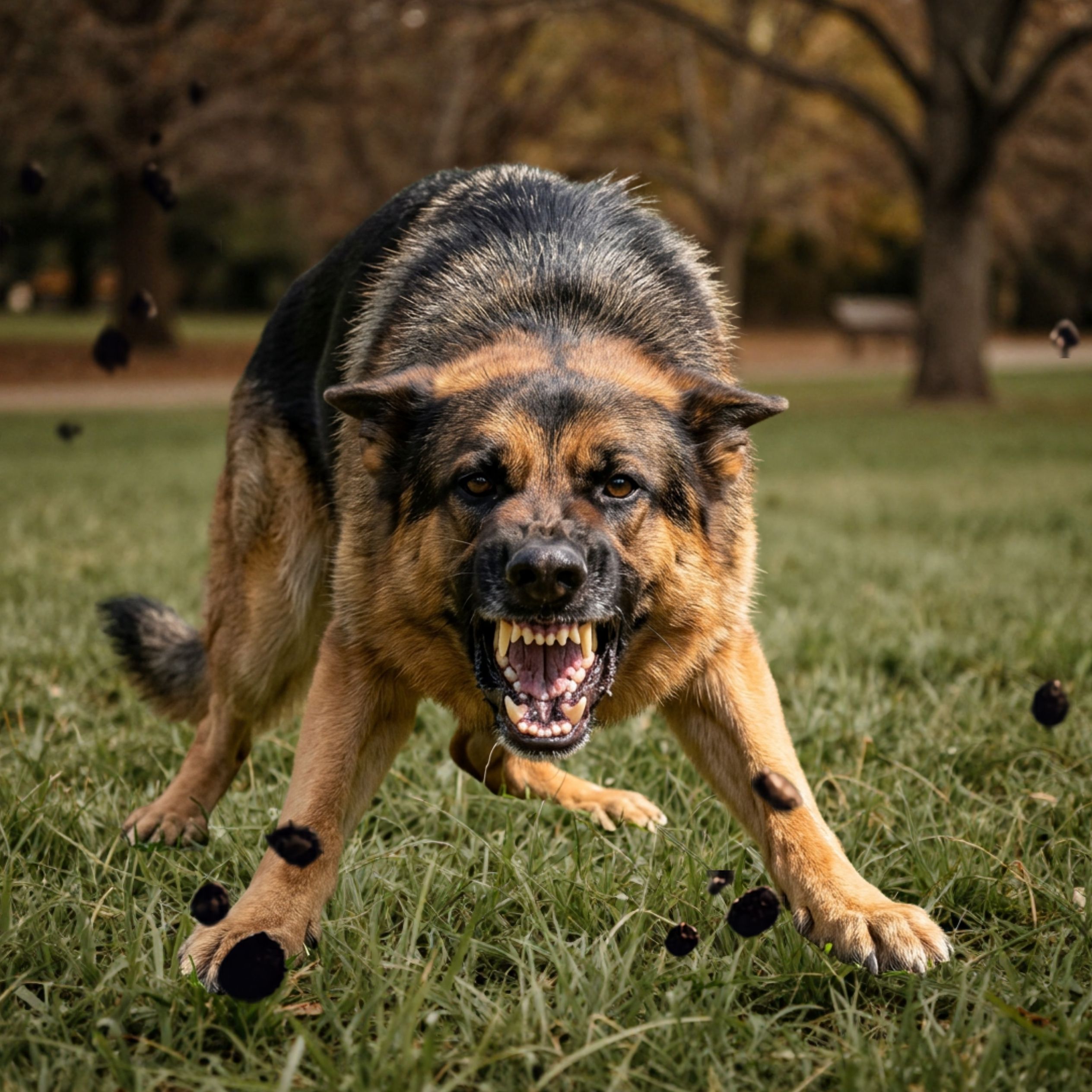
The Causes of Aggression in Dogs: The Role of Neurobiology, Emotion, and Sympathetic Nervous System Activation
Aggression in dogs is a complex behavioural phenomenon arising from biological, psychological, environmental, and social factors. Although aggression is often viewed negatively because of its potential consequences for humans and other animals, it is important to recognise that aggression itself is a natural behaviour that evolved as part of a species’ survival repertoire. Throughout evolution, animals that could effectively defend themselves, protect resources, avoid threats, and compete for survival had significant adaptive advantages. Consequently, aggression should not be viewed solely as a behavioural problem but as a sophisticated response generated by neural and physiological systems designed to preserve life. Modern research indicates that most canine aggression is associated not with a desire to dominate or inflict harm, but with fear, stress, anxiety, pain, frustration, territorial defence, or resource protection. These motivations activate neural pathways that prepare the animal to respond to perceived danger.
Aggressive behaviour stems from the dog’s perception of his/her environment. Dogs constantly gather information through sensory systems that process visual, auditory, olfactory, and tactile stimuli. These inputs are transmitted to the brain, where they are evaluated for significance. One of the most important structures in this process is the amygdala, part of the limbic system, which is responsible for emotional processing and threat detection. The amygdala functions as an alarm centre, continuously monitoring sensory information for signs of potential danger. When a stimulus is perceived as threatening, the amygdala rapidly initiates defensive responses long before conscious assessment can occur. From an evolutionary perspective, this rapid response system allows an animal to react to danger within fractions of a second, greatly increasing its chances of survival.
Activation of the amygdala triggers a cascade of neurological events involving the hypothalamus and the autonomic nervous system. The autonomic nervous system comprises two complementary divisions: the parasympathetic and sympathetic nervous systems. The parasympathetic nervous system is often described as the “rest and digest” system because it promotes recovery, relaxation, digestion, and metabolic maintenance. In contrast, the sympathetic nervous system mobilises the body during emergencies and is commonly associated with the fight-or-flight response. When a dog perceives a threat, sympathetic activation occurs almost instantaneously, preparing the body for defensive action. This response is one of the most powerful survival mechanisms in mammalian biology.
The physiological effects of sympathetic activation are extensive and occur throughout the body. Signals from the hypothalamus stimulate the adrenal medulla, which releases epinephrine (adrenaline) and norepinephrine (noradrenaline) into the bloodstream. These catecholamines produce profound physiological changes within seconds. Heart rate accelerates to increase blood flow to vital organs and skeletal muscles. Blood pressure rises, ensuring rapid delivery of oxygen and nutrients to tissues involved in potential physical exertion. Respiratory rate increases, allowing greater oxygen intake and enhanced carbon dioxide removal. The pupils dilate, improving visual sensitivity and situational awareness. Simultaneously, blood is redirected from the digestive system to the muscular system because immediate survival takes precedence over digestion. Muscle fibres receive increased energy supplies, becoming tense and prepared for rapid movement. The entire organism is transformed from a state of relative calm to one optimised for emergency action.
These physiological changes are accompanied by significant shifts in cognition and behaviour. During sympathetic arousal, attention narrows and becomes highly focused on the perceived threat. This phenomenon, often termed attentional narrowing, reduces the animal’s ability to process unrelated environmental information. Learning, problem-solving, and responsiveness to owner cues diminish as neural resources are redirected towards survival. In highly aroused states, the cerebral cortex, responsible for higher-order cognitive processing, exerts less influence over behaviour, while subcortical survival circuits assume greater control. Consequently, dogs experiencing intense fear or arousal may appear to ignore cues from owners or behave irrationally. From a neurobiological standpoint, however, such responses reflect a nervous system operating exactly as evolution intended during perceived emergencies.
Fear is among the most significant contributors to aggressive behaviour in domestic dogs. Fear-based aggression develops when a dog believes that a person, animal, or situation poses a threat. In many cases, the aggressive display serves not to attack but to increase distance from the perceived danger. Dogs that have experienced trauma, inadequate socialisation, unpredictable environments, or aversive training methods often develop heightened sensitivity to threatening stimuli. Repeated exposure to stressful experiences can sensitise neural pathways involved in fear processing, causing the sympathetic nervous system to activate more rapidly and intensely in future situations. The result is an animal that may react aggressively to relatively minor triggers because its nervous system has become conditioned to anticipate danger.
Pain also plays a critical role in the development of aggression. Medical conditions such as osteoarthritis, dental disease, orthopaedic injuries, spinal disorders, and chronic inflammatory diseases can significantly alter a dog’s behaviour. Pain signals not only activate sensory pathways but also influence emotional processing centres within the brain, including the amygdala. Persistent discomfort increases irritability, lowers tolerance for handling, and heightens defensive reactions. A dog experiencing chronic pain may learn to associate human or animal interaction with further discomfort, leading to growling, snapping, or biting when approached. In many cases, aggression that appears sudden or unexplained can ultimately be traced to an underlying medical condition that has altered the animal’s emotional and physiological state.
Another important factor is chronic stress. While acute sympathetic activation is adaptive and beneficial during genuine emergencies, prolonged activation can be detrimental. Dogs living in stressful environments often experience repeated stimulation of the hypothalamic-pituitary-adrenal (HPA) axis. This system regulates the secretion of cortisol, the primary stress hormone. Although cortisol helps mobilise energy during challenging situations, chronic elevation can disrupt emotional regulation, impair cognitive function, and heighten vigilance. Over time, the nervous system becomes sensitised, so progressively smaller stimuli can trigger strong responses. As this process continues, the threshold for aggression decreases, making reactive and defensive behaviours more likely. Dogs subjected to chronic stress frequently display heightened alertness, exaggerated startle responses, reduced frustration tolerance, and increased emotional reactivity.
The brain’s neurochemical environment further influences aggressive behaviour. Aggression is regulated by a complex network of neurotransmitters and hormones, particularly serotonin, dopamine, norepinephrine, and cortisol. Serotonin plays a crucial role in emotional stability and impulse control, and reduced serotonergic activity has been linked to increased impulsive aggression. Dopamine influences motivation, reward processing, and behavioural activation, while norepinephrine contributes to vigilance and environmental monitoring. Disturbances in these neurochemical systems may alter the balance between inhibition and excitation in the brain, increasing the likelihood of aggressive responses in challenging circumstances. Thus, aggression is not solely a behavioural issue but also reflects underlying neurological and biochemical processes.
From a behavioural perspective, aggression is rarely the first response to conflict. Most dogs follow a predictable defensive sequence that begins with subtle warning signals. Avoidance, freezing, turning away, lip-licking, body stiffening, and growling are often displayed before physical aggression occurs. These behaviours serve as communication signals intended to prevent escalation. Only when these signals fail or escape is perceived as impossible does a dog typically progress to lunging, snapping, or biting. This pattern reflects a fundamental principle of animal behaviour: physical conflict carries inherent risks, and organisms generally seek less dangerous methods of resolving threats whenever possible.
In conclusion, dog aggression results from intricate interactions among evolutionary history, neurobiology, physiology, emotional processing, learning, environmental influences, and physical health. Central to this process is the activation of the sympathetic nervous system, which prepares the body for survival when danger is perceived. Through the release of adrenaline, increased cardiovascular activity, heightened vigilance, muscular preparation, and cognitive narrowing, the sympathetic system creates the physiological conditions necessary for defensive behaviour. Aggression emerges when these survival mechanisms determine that confrontation is the most effective means of protecting the individual from perceived harm. Far from being evidence of malice or intentional wrongdoing, aggression is often the visible expression of biological systems operating according to deeply rooted evolutionary principles.
Hopefully, this will clarify why early socialisation is so important, why some dogs might show aggression at times, and why punitive training methods are not advisable.